

Cyclones / Pre-Separator Cyclone Filter
30 May 2024
Factory Ventilation Systems
30 May 2024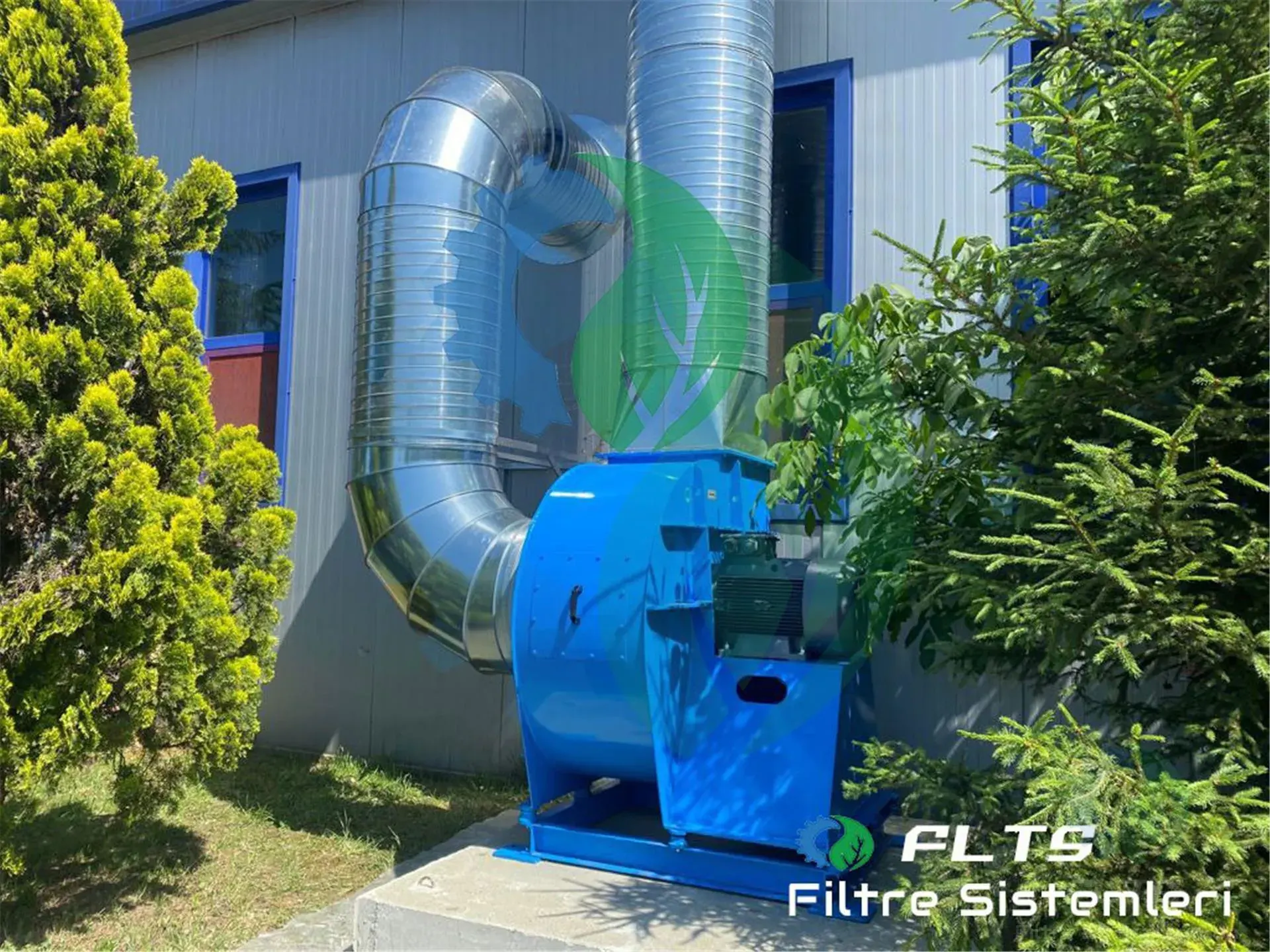
Industrial Fans
Industrial fans are used to evacuate smoke and dirty air.
The transmission of dirty or clean air can be done with centrifugal fans.
It can be made of appropriate thickness and material according to the application area; Mild sheet, stainless steel sheet, hot dip galvanized under special conditions.
Maximum efficiency and engine power are selected by our engineers and we offer the right product to our customers.
Accurate calculation of centrifugal fan features can affect many factors, from the energy consumption of the company to the efficiency of the fan.
Directly coupled fans are produced with pulley coupling drives depending on pressure and flow differences.
- industrial fan
- centrifugal fan
- close-bladed fan
- backward curved fan with sparse blades
- high pressure fan
- radial fan
What Is an Industrial Fan?
An industrial fan is a machine that converts the power it receives from an electric motor into air movement with the help of blades. The motor turns the impeller, the impeller pushes the air, and the casing directs this air in the desired direction. It is also called an industrial-type fan or heavy-duty fan.
The two basic values that define a fan are flow rate and pressure. Flow rate shows the amount of air moved per unit of time and is given in cubic meters per hour. Pressure expresses the fan’s ability to overcome the resistance of ducts, elbows and filters. Two fans that deliver the same flow rate give completely different results on site if their pressure values differ. For this reason, high flow rate alone is not enough on long, filtered lines.
How Does an Industrial Fan Work?
Air enters the fan through the inlet. The rotating impeller gives the air velocity, and the casing converts part of this velocity into pressure. The air leaves through the discharge outlet and is delivered to the duct or the atmosphere. The shape of the impeller determines the path the air follows inside the fan and the kind of job the fan is suited to.
Every fan has a fan curve showing the relationship between flow rate and pressure. The plant’s duct system also has its own resistance curve. The point where the two curves intersect is the fan’s actual operating point on site. If the calculation is not made on this point, the fan either does not deliver the expected flow rate or draws more energy than necessary.
There is a fixed relationship between speed and the other values. When speed doubles, flow rate doubles, pressure increases fourfold and power demand increases eightfold. Small speed changes therefore have a significant effect on motor power. The same relationship also explains why energy consumption drops rapidly when speed is reduced with a frequency inverter.
Types of Industrial Fans
Industrial fan types are classified according to the path the air follows in the impeller. In an axial fan the air flows parallel to the shaft. In a centrifugal fan the air is thrown outward by centrifugal force and changes direction by ninety degrees. Duct-type fans are forms of these two groups installed inside a duct. The table below compares the three groups on common criteria.
| Fan type | Air flow direction | Flow rate | Pressure | Suitable for |
|---|---|---|---|---|
| Axial fan | Parallel to the shaft | High | Low | Short ducts, wall and roof exhaust |
| Centrifugal fan | Perpendicular to the shaft, outward | Medium to high | High | Long ducts, filtered dust collection lines |
| Duct-type fan | Along the duct axis | Moderate | Low to medium | Building ventilation and intermediate transfer lines |
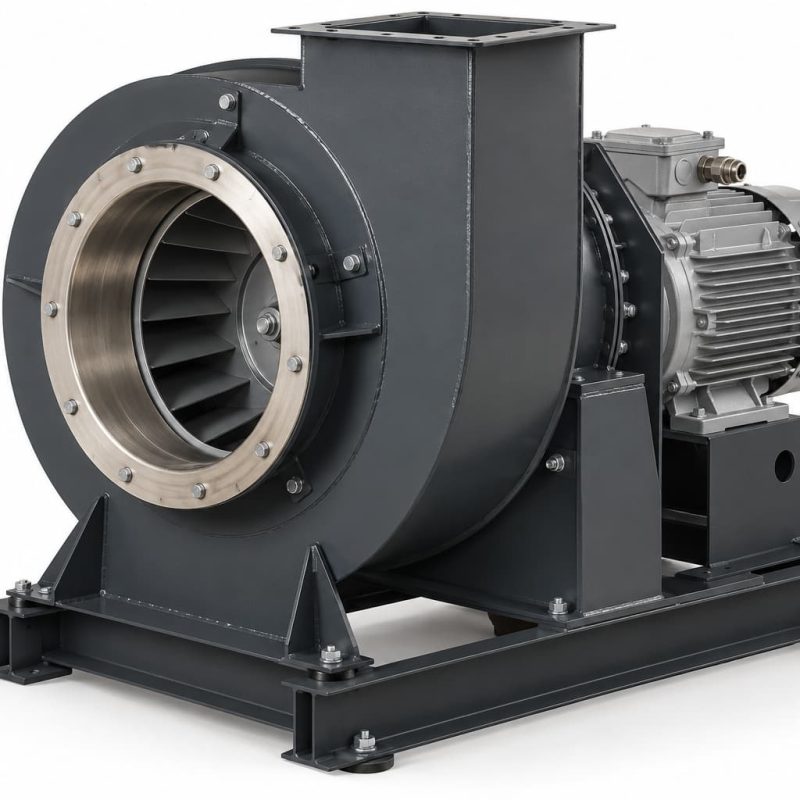 ATEX Exproof Fan
 Radial Fan
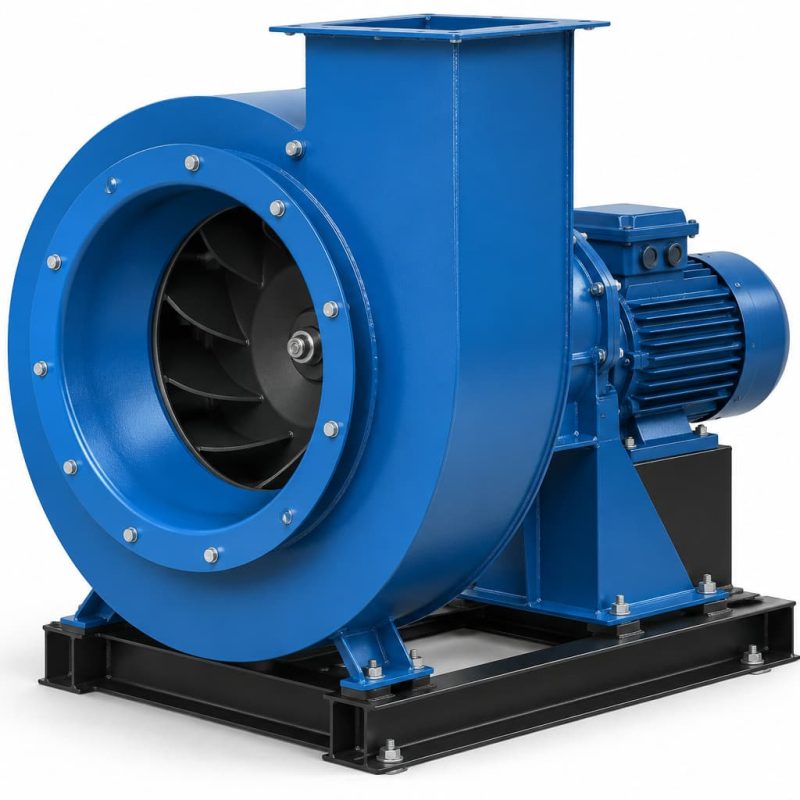 Centrifugal Scroll Fan
Axial Fans
An axial fan pushes air along the shaft axis with its propeller-shaped impeller. Because it moves a high air volume with low resistance, it is used for general ventilation of large spaces. It is mounted directly on a wall, a roof or the opening of a short duct. On models with adjustable blade angle, the flow rate can be regulated within a certain range without changing the impeller.
Its limit is on the pressure side. As the duct gets longer, the number of elbows increases and a filter is added to the line, the flow rate of an axial fan drops quickly. For this reason it is not used alone in filtered systems. For roof and wall exhaust that requires a high volume over a short distance, it is an economical option.
Centrifugal Fans
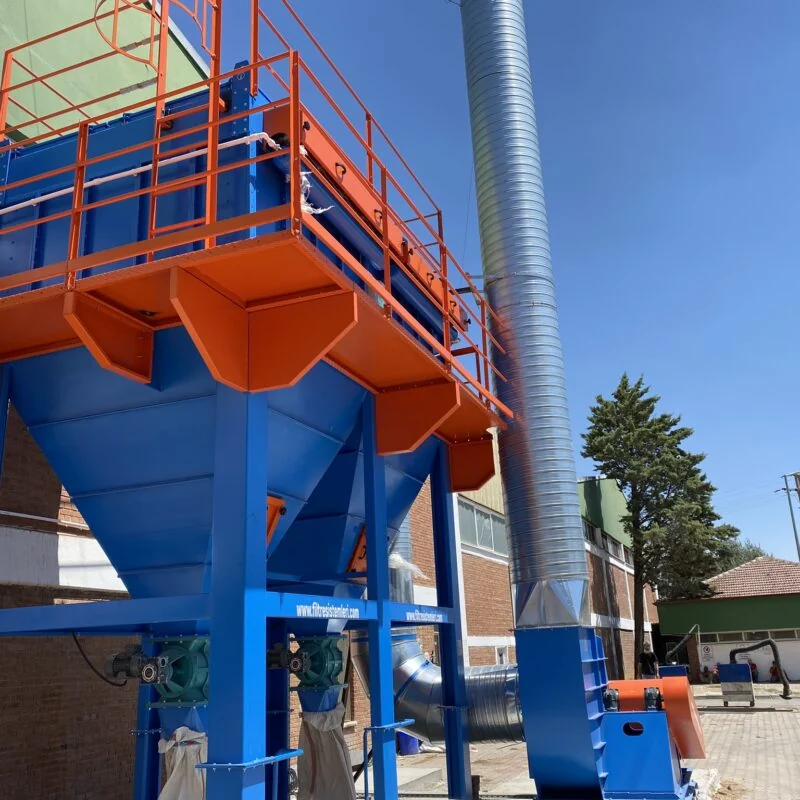
A centrifugal fan throws the air entering the center of the impeller out to the blade tips and discharges it through the spiral casing. Because this design produces high pressure, it is preferred on long duct lines and in filtered dust collection systems. Because of its spiral casing it is also called a scroll fan in the field. The blade shape determines the fan’s efficiency, noise level and the kind of air it will work with.
- Backward-curved blade fan: high efficiency, used with clean or filtered air.
- Forward-curved, dense-blade fan: runs quietly at low speed and is suitable for clean ventilation lines.
- High-pressure fan: with its narrow-blade design it provides power for long, high-resistance lines.
- Radial fan: with its straight-blade design it conveys abrasive and sticky dust without letting it build up.
In areas with explosive dust or gas, ATEX-class counterparts of these types, built so that they do not produce sparks, are used.
Duct-Type Fans
A duct-type fan is a fan connected in series inside the air duct that supports the flow at an intermediate point. Thanks to its compact casing, it takes up no space in ceiling voids and tight spaces. It is manufactured according to rectangular or round duct dimensions.
Its area of use is mostly lines carrying clean air. It provides intermediate pressure support in office, warehouse and production area ventilation. On long lines, several units are connected in series and the pressure loss is compensated point by point. It is not preferred on lines carrying heavy dust, because cleaning the impeller becomes difficult.
Industrial Fan Technical Specifications
The values that define a fan are flow rate, static pressure, speed, motor power, casing material and drive type. These values are given together at the quotation stage, because when one changes the others change too. The table below summarizes the technical parameters and the factors that determine them.
| Technical parameter | What it means | Determining factor |
|---|---|---|
| Flow rate | Air volume moved per hour | Plant volume, number of suction points and opening dimensions |
| Static pressure | Ability to overcome duct resistance | Duct length, elbows and filter resistance |
| Speed | Number of impeller revolutions per minute | Flow rate and pressure target, impeller diameter |
| Motor power | Power required to turn the impeller | Flow rate, pressure and fan efficiency |
| Body material | Resistance to abrasion, corrosion and temperature | Black sheet, stainless steel or galvanized sheet |
| Drive arrangement | How the motor is connected to the impeller | Direct coupled or belt and pulley |
Material selection is made according to the temperature, humidity and abrasiveness of the air being moved. Under normal conditions black sheet is used. On lines with corrosion risk stainless steel is used, and for applications exposed to the outdoors hot-dip galvanized sheet is preferred. On the motor side the protection class is determined by the ambient conditions. In an explosive environment an ex-proof motor and a suitable casing are selected together.
How Is an Industrial Fan Selected?
Industrial fan selection begins with a flow rate and pressure calculation. The flow rate is found from the sum of the suction points or from the product of the plant volume and the number of air changes. The pressure is the sum of the duct length, number of elbows, contractions and filter resistance. A selection made without finding both values is based on guesswork.
When calculating system resistance, the pressure drop of units such as a jet pulse cartridge filter is also added to the total. As the filter gets dirty, the resistance rises. For this reason the calculation is made not on the clean filter value but on the dirty filter value. Otherwise the system loses suction within a few weeks.
The points to consider in selection are as follows:
- Character of the air: clean, dusty, sticky, fibrous or abrasive.
- Operating temperature and humidity: determines the impeller material, bearing arrangement and seal type.
- Explosivity: if there is combustible dust or gas, an ATEX construction suited to the zone classification is required.
- Fan position: before or after the filter, indoors or outdoors.
- Noise limit: the impeller type, speed and, if needed, the silencer decision are made accordingly.
- Operating time: on continuously running lines an efficient impeller and an inverter pay for themselves quickly.
Fan Position on Filtered Lines
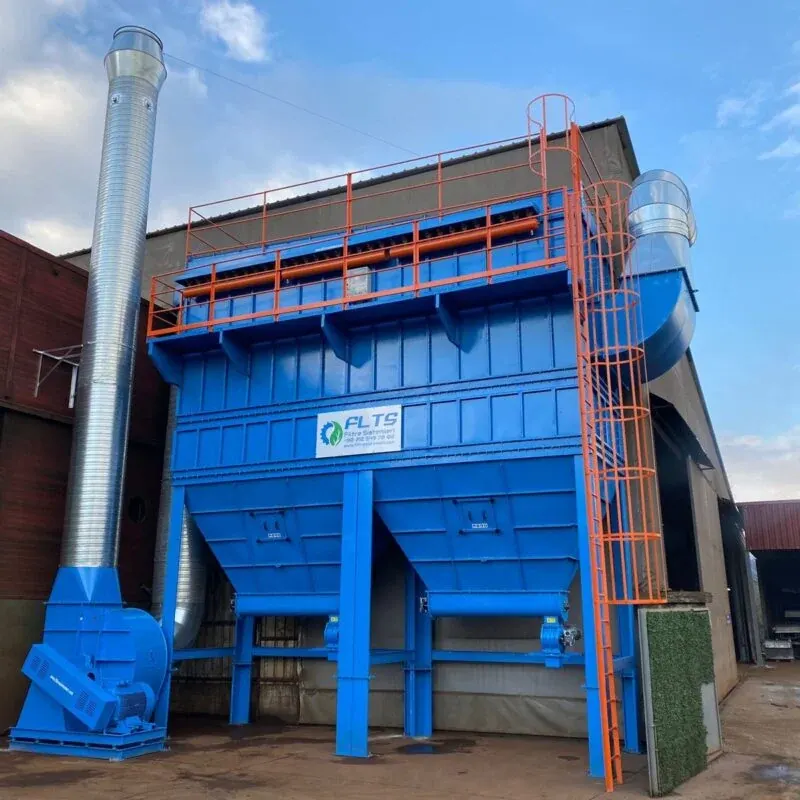
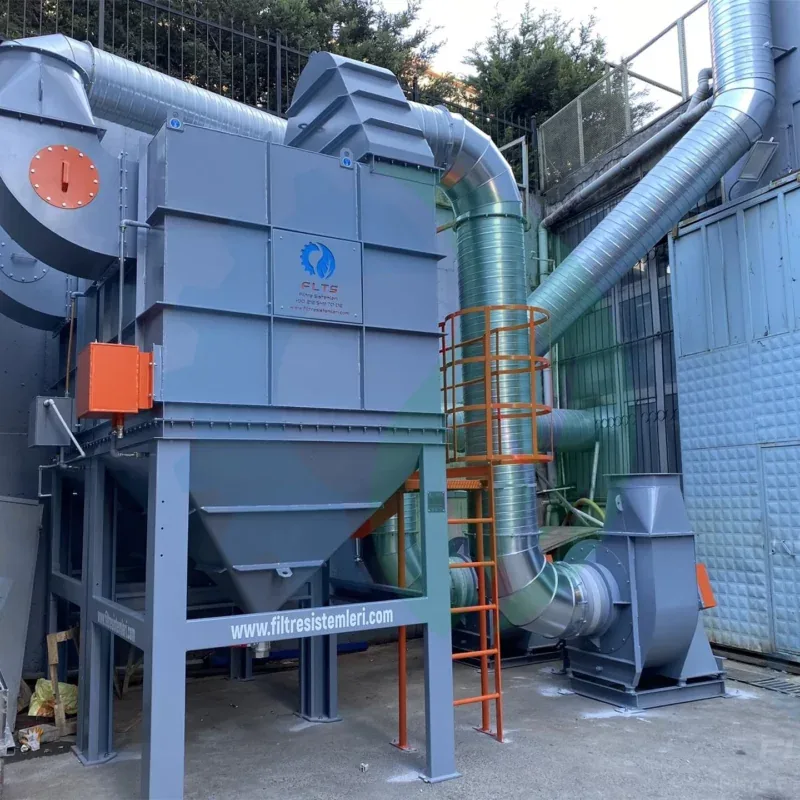
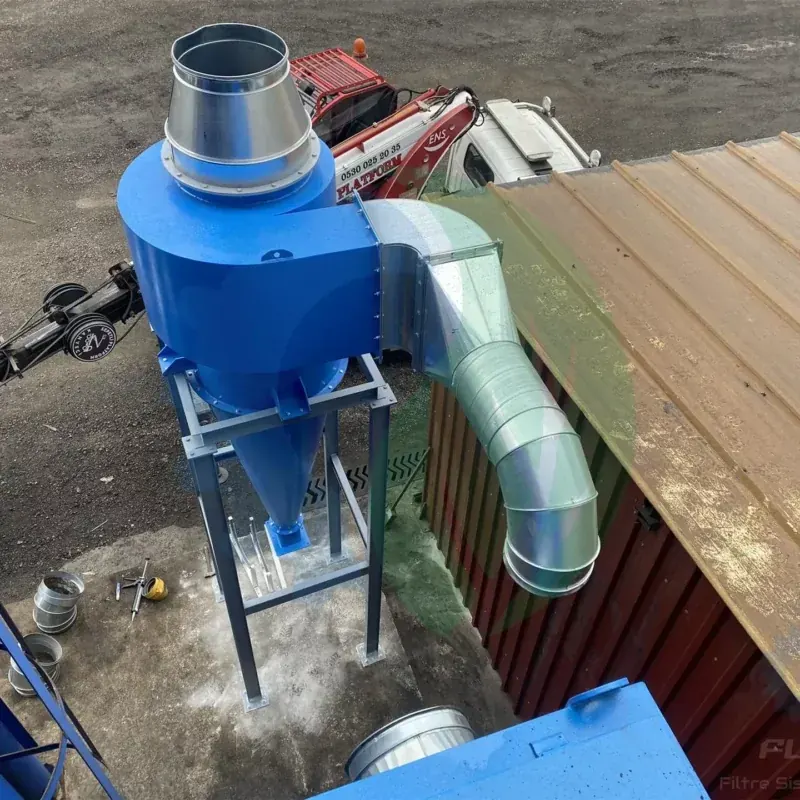
On filtered lines the fan is usually placed after the filter unit. This way cleaned air reaches the impeller, and wear and balance deterioration are kept to a minimum. This arrangement is common on jet pulse bag filter lines. On lines carrying abrasive and coarse particles, a pre-separator cyclone is added before the filter. Where dust must pass through the fan, a radial type with a thick-sheet casing and straight blades is used.
On lines carrying hot flue gas, a gas cooling unit is placed before the fan. By lowering the gas temperature, both the impeller and the filter element are protected. The bearings can also be placed outside the casing so that they are kept away from the hot gas.
Industrial Fan Manufacturing and Engineering
Industrial fan manufacturing begins with measuring the operating conditions of the plant. The temperature, dust concentration, humidity and chemical content of the air to be moved are determined. Production without these data often fails to deliver the expected result on site. Industrial fan design therefore begins with measurement data, not selection from a catalog.
At the design stage, the impeller shape, casing size, sheet thickness and material are decided together. After production, dynamic balancing is applied to the impeller, because an unbalanced impeller wears out the bearings in a short time. If an existing fan is to be replaced, an exact equivalent can be derived from the nameplate information and connection dimensions of the old unit.
High-Flow Large Fans
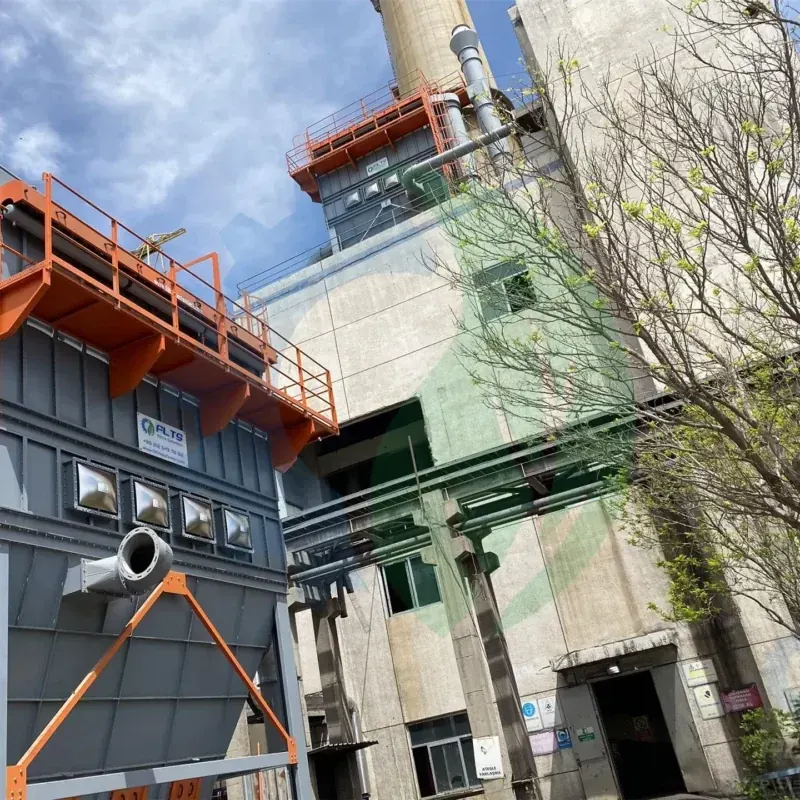
Very high air flow rates are moved in cement, iron and steel, and power plants. This volume is often not divided among small fans. A single large unit takes up less space and creates fewer maintenance points. On large lines carrying abrasive dust, a radial-type impeller is preferred. Wear plates are added to the blade surfaces to extend impeller life. Because imbalance grows quickly in large impellers, the casing sheet is kept thick and vibration measurement is carried out regularly.
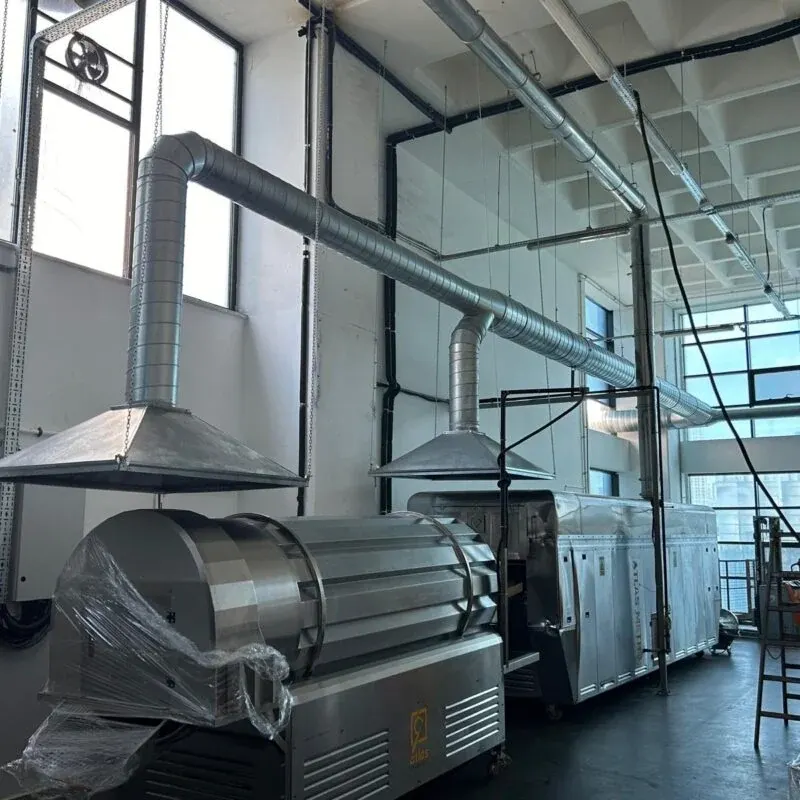
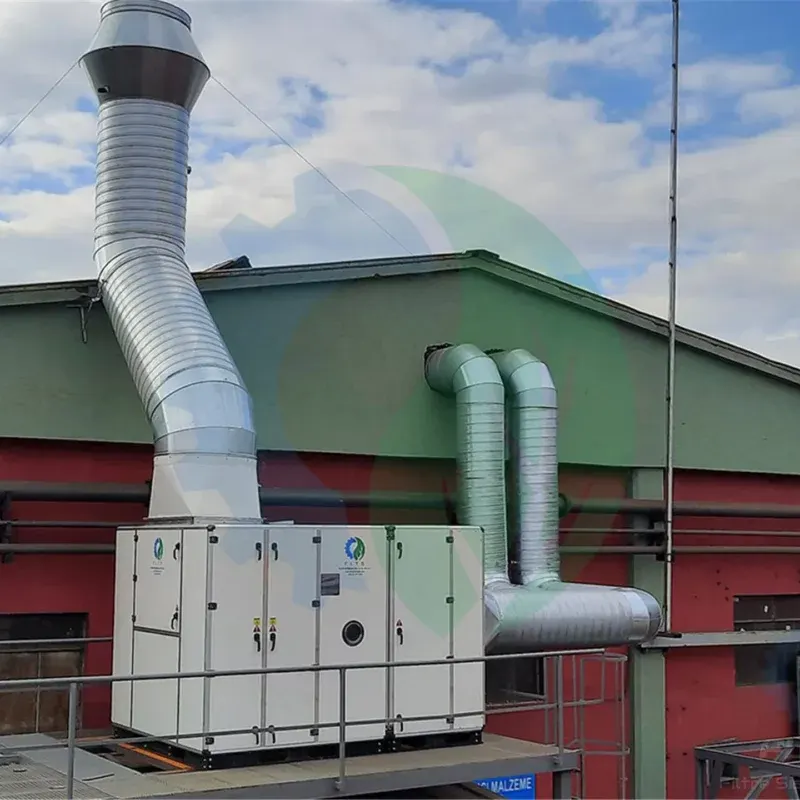
The fan is often engineered not alone but as part of a system. When the duct, filter, dust discharge and automation are considered together, the fan stays at the correct operating point. On lines installed for general ambient ventilation, the fan serves as the main equipment within factory ventilation systems.
Industrial Fan Installation and Maintenance
Installation begins with mounting the fan so that its vibration is not transmitted to the structure. Vibration mounts are placed under the fan base, and flexible connections are used at the duct connections. This part, known as an industrial fan hose or bellows, both cuts vibration and tolerates small misalignments. Sufficient straight duct length is left at the inlet and outlet, because air entering the fan through an elbow disturbs the flow and reduces the flow rate. At commissioning the direction of rotation is always checked.
The following items are monitored during maintenance:
- Dust build-up on the impeller surface: one-sided build-up disturbs the balance and increases vibration.
- Bearing noise and temperature: rising noise and heating are the first signs of failure.
- Belt tension: a loose belt reduces speed, and an overtight belt strains the bearing.
- Motor current: rising current often points to impeller fouling or a bearing problem.
- Vibration value: when it rises, a balance check is carried out without delay.
When cleaning the impeller, the blade surfaces are cleaned evenly. On lines carrying abrasive and heavy dust the maintenance interval is shortened.
Factors That Determine Industrial Fan Prices
Industrial fan prices are not given from a single list; each unit is priced according to the data of the line. The main items that determine the cost are flow rate, static pressure, motor power, casing material, sheet thickness and drive type. When a stainless casing and an ex-proof motor are requested, the budget rises noticeably. A belt and pulley drive is cheaper at the initial investment, but belt and bearing replacement is a regular maintenance item.
Energy cost is also taken into account in the evaluation. In most plants the fan runs for a large part of the day. A high-efficiency impeller and an inverter drive recover the initial investment difference through operating cost. Large differences between quotations often arise from casing sheet thickness and the motor efficiency class. For this reason the comparison is made on the technical data sheet. You can get a project-specific price by filling in the quotation form with your line’s data.
Industrial Fan Types and Housing Selection by Industry
Industrial fans do not do the same job in every industry. The table below summarizes which fan type stands out in which plant and what is checked before ordering.
| Industry | Role of the fan | Selection point |
|---|---|---|
| Foundry | Furnace fume and sand dust extraction | High temperature, abrasive dust, cooling before the filter |
| Wood and furniture | Sawdust and sanding dust conveying | Fibrous and combustible dust, ex-proof construction if necessary |
| Paint and coating | Booth extraction and solvent vapor exhaust | Explosive vapor, housing that does not generate sparks |
| Food and feed | Conveying and packaging line extraction | Combustible dust, cleanable surface, stainless housing |
| Cement and aggregates | High-flow dust collection line | Thick plate, wear plate, large single unit |
| Welding and metalworking | Fume and grinding dust extraction | Sparks, fine particles, position after the filter |
| General factory ventilation | Renewing ambient air, heat removal | High flow, low pressure, industrial extractor or axial type |
A radial fan is selected on lines where dust passes through the fan, a centrifugal scroll fan on lines with filters and long ducts, and an ATEX explosion-proof fan in sections with combustible dust or gas.
Information to Prepare When Requesting a Quotation for an Industrial Fan
Industrial fan prices are settled with this information. A quotation given with incomplete data often requires revision in the field.
- Total air flow or number of suction points and the opening size of each point.
- Duct length, number of elbows and whether there is a filter on the line.
- Temperature, humidity and dust concentration of the air being conveyed.
- Type of dust: abrasive, sticky, fibrous or combustible.
- Fan position: before or after the filter, indoors or outdoors.
- Electrical infrastructure, drive preference (direct coupled or belt-pulley) and inverter requirement.
- If there is a noise limit, the permitted value and the dimensions of the place where the fan will be installed.
Fan manufacture is done according to this data. On lines that do not fit standard sizes, the impeller and housing are made project-specific.
Frequently Asked Questions
How is industrial fan capacity calculated?
The flow rate is found from the sum of the suction points or from the product of the plant volume and the hourly air change rate. The required static pressure is determined by adding the duct and dirty filter resistance to this flow rate.
What is the difference between a centrifugal fan and an axial fan?
An axial fan moves high flow at low pressure. A centrifugal fan produces high pressure. On filtered and long-duct lines the centrifugal type is preferred.
How is an industrial fan motor selected?
Motor power is found using the calculated flow rate, static pressure and fan efficiency. The protection class is added according to ambient conditions, and an ex-proof feature in an explosive environment.
Is the fan placed before or after the filter?
It is usually placed after the filter, so that clean air reaches the impeller. On lines where dust must pass through the fan, a straight-blade radial fan is used and a cyclone can be added in front of it.
What determines the industrial fan hose?
The hose or bellows diameter is selected according to the fan opening size, and its material according to the temperature and abrasiveness of the air. The flexible connection also prevents vibration from passing into the duct.
Are industrial fans manufactured in custom sizes?
Yes. Production is carried out with flow rate, pressure and casing material determined according to the plant. When the nameplate information of the existing fan or the system data is provided, an exact equivalent is derived.
How Much Are Industrial Fan Prices?
Industrial fan prices; It varies depending on the type, size, material, motor power, brand and additional features of the fan. While small-scale industrial fans can be found at more affordable prices, large and high-capacity fans come with higher price tags.
What is an Industrial Snail Fan?
Industrial snail fan is a type of fan used for air extraction and ventilation. It is used in factories, workshops, warehouses and other industrial facilities.
How to Calculate Industrial Ventilation?
When calculating industrial ventilation, the size of the area that needs to be ventilated and the purpose of use are first determined. Calculations are then made taking into account factors such as the volume of the area, air exchange rate and the required air flow rate.
General information on dust collection systems
Importance of Industrial Fans
industrial fanhas become an integral part of modern industrial processes. These fans increase the efficiency of industrial facilities and improve working environments by offering a wide range of uses and various advantages. The importance of industrial fans is the ventilation they provide for businesses; Humidity control is closely related to basic functions such as heating, cooling and air circulation. With their energy saving potential and long-lasting structure, industrial fans contribute to the sustainability and efficiency goals of modern industry.
Usage Areas of Industrial Fans
Industrial ventilation fansIt has a wide usage area. They are frequently used especially in industrial facilities, commercial spaces and some home environments. These fans are ideal for various purposes such as air circulation. Areas of use of industrial fans include factories, warehouses, wood processing facilities, greenhouses, shopping malls, gyms, restaurants and many other places.
What are the Advantages of Industrial Fans?
Industrial fans have many advantages. These; These include factors such as providing effective ventilation, quickly cooling or heating large volumes, cleaning the air, controlling humidity and saving energy. Additionally, industrial fans are made of durable materials and are known for their designs suitable for long-term use. These advantages make industrial fans preferred in various industrial and commercial applications.
Industrial Fan Types
industrial fans They are equipment used to meet a number of needs of businesses such as ventilation, cooling, heating and general air circulation. These models are designed to meet different application requirements. Industrial fan types; They differ in terms of their structures, operating principles and areas of use. Thus, it enables its effective use in various industrial processes and commercial spaces.
Axial Fans
Axial fans represent an important type among industrial fans. These fans have a design in which the airflow occurs directly parallel to the fan’s rotation axis. They are preferred for low pressure applications and have high volume air carrying capacity. Axial fans have a long cylindrical structure and can be found in different configurations in terms of installation.
Usage Areas of Axial Fans
Axial fans are used in a variety of industrial and commercial applications. They are widely used in areas such as ventilation systems, air cooling systems, radiators, refrigerators, greenhouses, agriculture and food processing facilities. The high volume air movement capabilities of axial fans are ideal for providing effective air circulation in large areas.
Axial Fan Types
Axial fans are produced in different types and features. This diversity includes fan models designed to meet different application requirements. For example; Fixed-wing axial fans are designed with fixed blades on the rotor and are low-cost and simple in structure. On the other hand, axial fans with adjustable blade angles have a more flexible design in which the blade angles can be adjusted to change the fan performance. Therefore, it facilitates fan selection according to different application needs.
Centrifugal Fans
Centrifugal fans, industrial ventilation systems It is a type of fan that is widely used to transport air. These fans create air flow with rotational motion and work effectively in high pressure applications. Centrifugal fans are driven by a rotor rotating inside a body and have the capacity to effectively move air by pushing the air flow outward with centrifugal force.
Usage Areas of Centrifugal Fans
Centrifugal fans are widely used in various industrial and commercial applications. Especially ventilation systems; They are frequently preferred in air conditioning systems, heating and cooling systems, drying processes and industrial processes. The ability of centrifugal fans to produce high-pressure airflow offers a wide range of uses and allows them to be used effectively in a variety of industrial processes.
Centrifugal Fan Types
Centrifugal fans are manufactured in types with different structural features and operating principles. For example; Forward inclined centrifugal fans are ideal for high pressure applications and are characterized by their blades being inclined. Back-curved centrifugal fans, on the other hand, are designed for use in lower pressure applications and provide quieter operation. This diversity allows centrifugal fans to be used flexibly to meet different application requirements.
Duct Type Fans
Duct type fans are fans designed to provide effective air circulation, especially in limited spaces. It is installed in a rectangular or square duct and carries the air along this duct. These fans are known for their compact designs and are available in models with various features for use in various application areas.
Usage Areas of Duct Type Fans
Duct type fans are frequently used, especially in building ventilation systems and industrial facilities. It offers an ideal solution where air needs to be moved in a certain direction and at a certain speed. For example; It is widely used in ventilation systems in office buildings, shopping malls, restaurants and hotels. It is also used in industrial facilities, laboratories and production facilities.
Duct Type Fan Types
Some duct fans are designed for high-pressure applications, while others are optimized to provide quieter operation at lower pressures. In addition, duct type fans have various air carrying capacities and speed options. It enables flexible use of duct type fans to meet different usage requirements.
How to Choose an Industrial Fan?
Industrial industrial fan Fan selection is a critical decision for businesses, and choosing the right fan can increase efficiency and reduce operating costs. Various factors should be taken into consideration when making any choice. These factors include factors such as the needs of the business, working environment conditions, location of the fan and environmental factors.
Fan Selection According to Need
Industrial ventilation fan according to need When choosing, the specific needs of the business, such as ventilation, cooling, heating or air circulation, should first be determined. Correctly assessing the needs is important for choosing the right fan type. For example, centrifugal fans may be preferred for a high-pressure application, while axial fans may be more suitable for high volume air circulation. Industrial heating fans are used to quickly heat large volume areas. Industrial cooling fans are systems used for temperature control.
Fan Capacity and Airflow Rate
Fan capacity and airflow rate are also determining factors in fan selection. Air flow rate and fan capacity determined in accordance with the needs of the business ensure that the system operates efficiently. These parameters should be carefully calculated according to the requirements of the enterprise and the field of application and play a major role in choosing the right fan.
Installation and Maintenance of Industrial Fans
Correct installation and regular maintenance of industrial fans ensures long-lasting and efficient operation of the fan. Professional installation and regular maintenance help businesses achieve the best performance from fans and are also essential for occupational safety and operational reliability.
The Importance of Professional Installation
Correct and safe installation of industrial fans ensures effective operation of the fan and also reduces occupational safety risks. Professional installation ensures that the fan is positioned correctly, securely fixed and electrical connections made where necessary. The importance of professional installation has a direct impact on the performance and durability of the fan.
Maintenance and Cleaning Tips
Regular maintenance and cleaning of fans, industrial fan manufacturers It is included in the information booklet provided by. This information ensures that the fan operates efficiently and extends its life. Maintenance and cleaning operations include cleaning fan blades, lubricating bearings, checking the engine and changing filters if necessary. Regular maintenance and cleaning ensures that the fan operates efficiently and prevents malfunctions. Therefore, businesses need to establish regular maintenance and cleaning programs.
Get detailed information about dust extraction systems!
Address: İkitelli Osb Eskoop San Sit C7 Blok No 464 Başakşehir / İstanbul
Gsm: +90 539 858 76 29
Gsm : +90 555 100 76 29
E-Mail:info@filtresistemleri.com
E-Mail:satis@filtresistemleri.com
- Category
- Dust Collection Systems
- Made in
- İkitelli OSB, Istanbul, Türkiye
- Updated