

Filter Cages
24 May 2024
Cartridge Filter
24 May 2024
Polyester Filter Bag
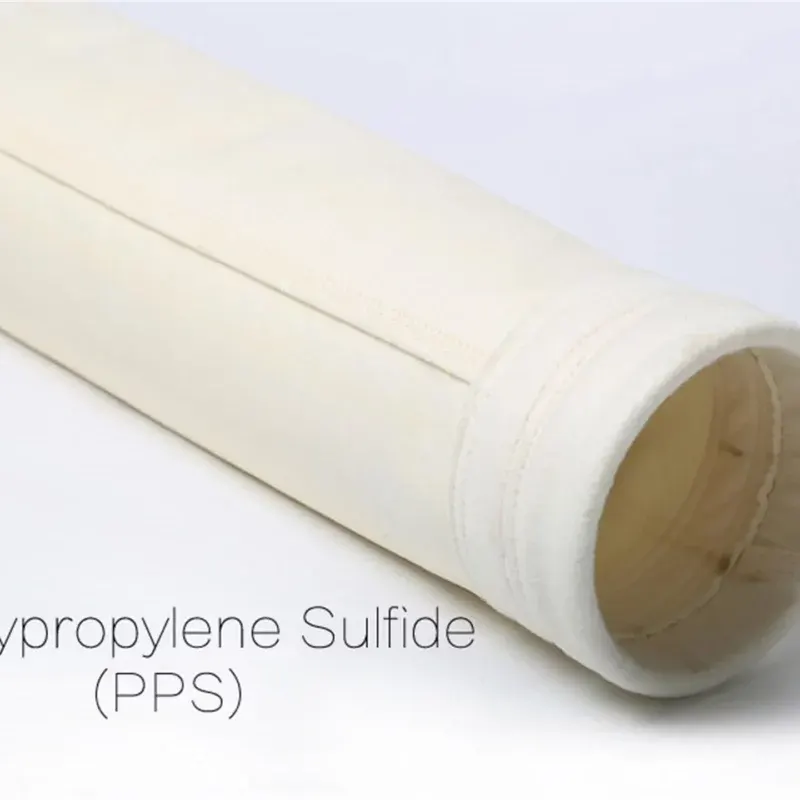
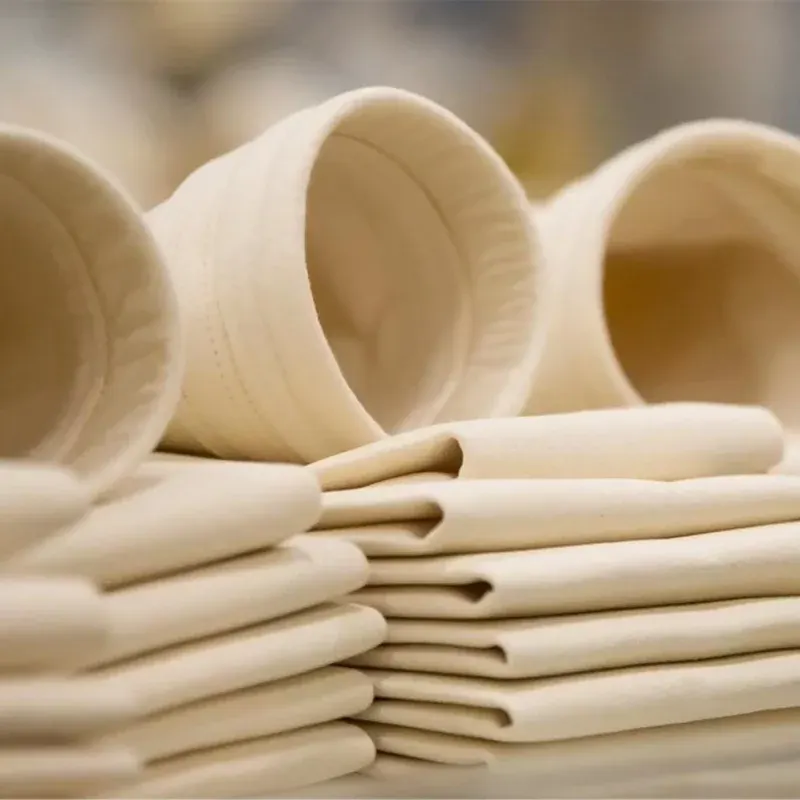
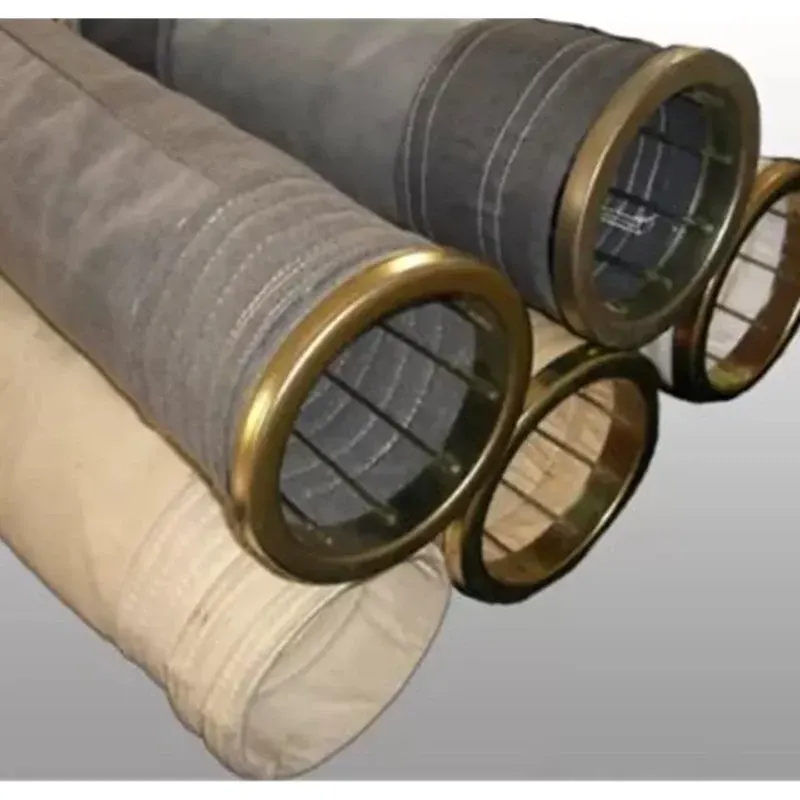
A polyester filter bag is a felt filter element produced from 100% polyester fiber by needle punching and used in dust collection units to capture airborne particles. It retains dust in the 0.5–1 micron range with high efficiency and operates continuously at a dry temperature of 150°C. With a water- and oil-repellent impregnation it can also be used in humid and oily environments; the right surface treatment extends bag life.
It is used to capture abrasive dusts such as calcite and kaolin in the cement and filler industries, and dry dust in wood, metal, chemical and feed plants. It has high tensile strength and a lower cost than other synthetic fibers. FLTS manufactures polyester bags to measure according to the unit’s tube sheet, cage dimensions and dust conditions.
- 525–550 g/m² weight options
- Calendered, scrim-supported and hydrophobic/oleophobic surface treatments
- Snap band, corded or flanged top
- Custom diameter and length to match the cage dimensions
Price per m²: 2.60 EUR/m² (weight: 525-550 g/m²). Contact us for a current quotation.
A polyester filter bag is the filter element that captures airborne particles in industrial dust collection systems. It is produced from 100% polyester fiber by needle punching and captures dust in the 0.5 to 1 micron range with 99 percent efficiency. Thanks to its high mechanical strength and reasonable cost, it is the most commonly used bag type in jet pulse bag filter units.
The product is manufactured at a weight of 525 g/m² and operates continuously at 150°C dry temperature. When a water and oil repellent finish is applied, its service life is extended in humid and oily environments. The sections below explain the technical values, types, size selection and maintenance conditions.
What Is a Polyester Filter Bag?
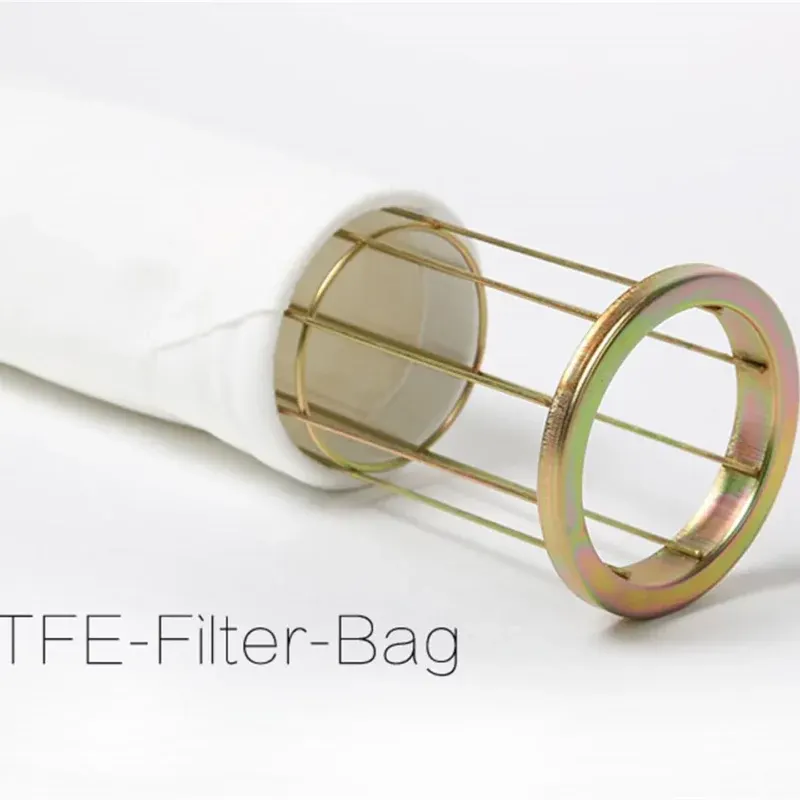
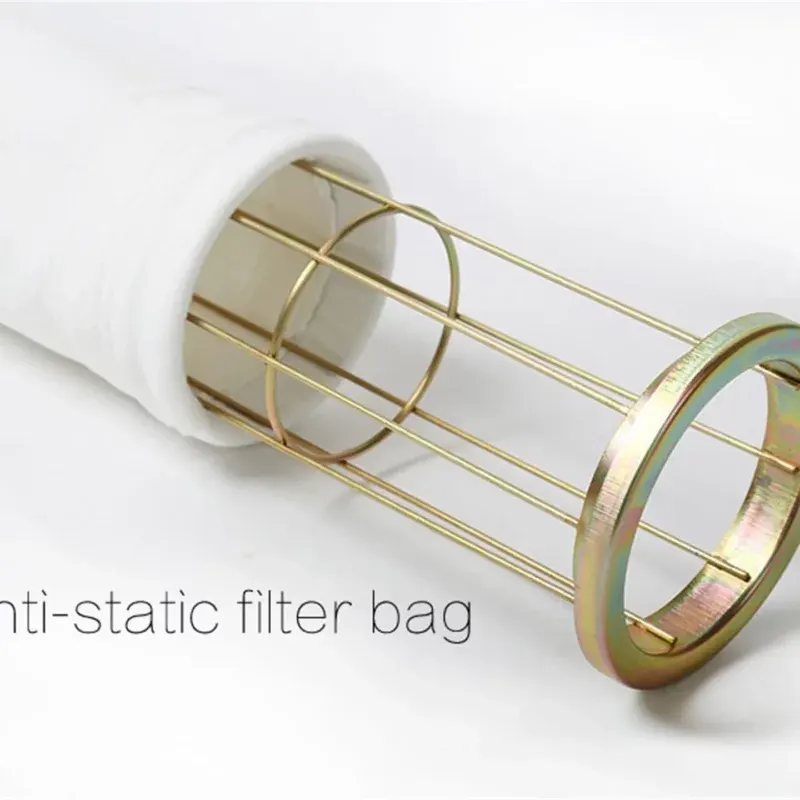
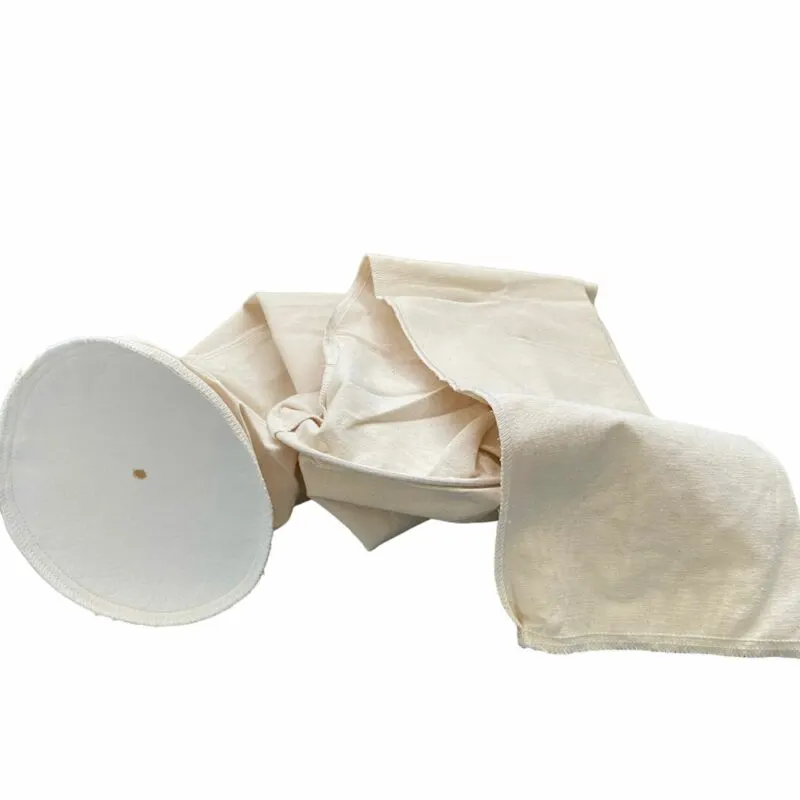
A polyester filter bag is a cylindrical filter element installed vertically inside a dust collection unit. Dusty air enters from the outer surface of the bag, the particles are retained on the surface and the clean air is drawn out from the center. The wire cage placed inside the bag prevents the bag from collapsing under suction pressure; for this reason the bag and the filter cages are measured together.
How Does a Polyester Filter Bag Work?
The dust layer that builds up on the surface is removed at certain intervals with a compressed air pulse. This method is called jet pulse cleaning, and the filter bag is manufactured with enough strength to withstand these pulses for years. The thin dust layer that forms on the surface during the first start-up is not removed completely; this layer acts as a secondary filter and increases efficiency. The reason polyester stands out is clear: its tensile strength is high and its cost is lower than other synthetic fibers.
The cleaning pulse is delivered by the pulse valve and the blow pipe. The pulse enters through the mouth of the bag, inflates the bag outward for a short time and the cake layer drops into the dust hopper. The intensity and frequency of the pulse directly affect the life of the bag: in a bag that is cleaned more often than necessary, the protective dust layer cannot form, efficiency drops and the felt fatigues.
Polyester Filter Bag Technical Specifications
Technical values determine under which conditions the product can operate. When temperature, weight and air permeability are read correctly, it is clear from the start whether the bag suits the plant. The chemical resistance rows are the most frequently overlooked but the most decisive part. The table below summarizes the standard values of the polyester filter product.
| Property | Value |
|---|---|
| Composition | 100% polyester |
| Scrim | Polyester |
| Weight | 525 g/m² ± 5% |
| Air permeability | 11,000 – 14,000 l/dm²/h (Dp: 200 Pa) |
| Thickness | 2.0 mm |
| Tensile strength | Warp 150 kgf/5 cm, Weft 190 kgf/5 cm |
| Surface treatment | Calendering and singeing, water- and oil-repellent hydrophobic finish |
| Operating temperature | 150°C continuous dry temperature |
| Acid resistance | Moderate |
| Alkali resistance | Poor |
| Hydrolysis resistance | Poor |
| Solvent resistance | Excellent |
| Oxidation resistance | Excellent |
The temperature value in the table applies to dry air. In flue gases with a high moisture content polyester undergoes hydrolysis and its service life shortens; the same limitation applies in alkaline environments. In plants where these two conditions exist, alternative fibers such as an acrylic filter bag or a PPS filter bag are considered.
Polyester Filter Bag Types
The product group is divided by production method, weight and surface treatment. These options, grouped under three main headings, are made from the same raw material, and the difference emerges at the finishing stage. When ordering a polyester bag filter, these three headings are determined together according to the dust analysis.
Polyester Filter Bag
The standard polyester bag filter is sewn from 525 g/m² felt that has been calendered and singed. Because the surface is flattened by ironing, the dust does not embed into the surface and is easily released by the jet pulse. For most plants collecting dry dust, this type alone is sufficient.
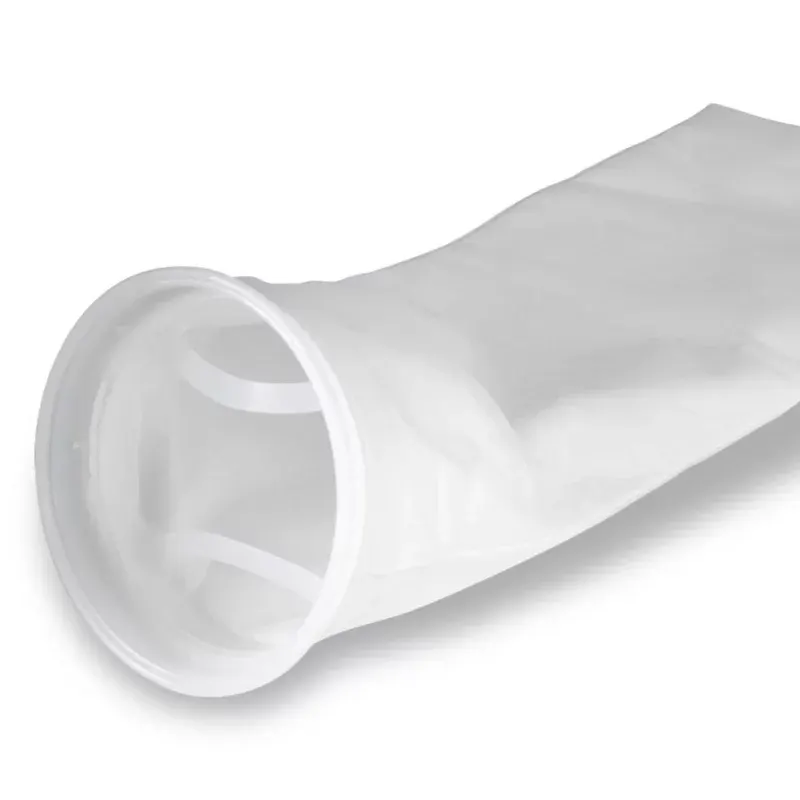
The mouth structure of the bag is determined according to the tube sheet of the system. Elastic snap band, drawstring and flanged options are available; the bottom is produced either flat or sewn. When the wrong mouth type is selected, dust leakage occurs and particles are seen at the stack outlet. This leakage is most often caused not by the bag itself but by the connection point, and viewed from the outside it is perceived as a product defect.
Polyester Needle Felt Filter Bag
A polyester needle felt filter bag is made from a fabric obtained by interlocking the fibers with thousands of needles. Unlike woven fabric, the pores are randomly distributed, so fine particles are captured in depth. Thanks to this structure, the needle felt filter delivers higher filtration efficiency than woven alternatives.
Needling density determines the pore structure of the product. A densely needled fabric captures finer dust, but air permeability falls and the pressure drop increases; when selecting a polyester needle felt filter bag, this balance is set according to the micron distribution of the dust and the fan capacity. A needle felt filter selected with very low air permeability cannot meet the fan’s draft, and dust leakage begins at the suction points.
Polyester Felt Filter
Polyester felt filter is the fabric from which the bag is made, and it is also supplied by the meter or in rolls. The standard weight is 525 g/m², while 550 g/m² is preferred on lines carrying aggressive dust. The thick felt filter option extends service life on crusher and sandblasting lines where abrasion is high. As the weight increases, strength rises but air permeability falls somewhat; for this reason the thick felt filter is used not on every line but at the points where abrasion is prominent.
Treatments applied to the surface of polyester felt filter directly change its performance. A hydrophobic finish repels moisture, an oleophobic treatment reduces the adhesion of oily dust, and antistatic fiber prevents static build-up on lines carrying explosive dust. Calendering compresses the surface and keeps dust from embedding, while singeing burns off loose surface fibers and makes cleaning easier. The treatment to be applied is determined after the dust sample has been examined.
Factors That Determine Polyester Filter Bag Prices
Filter bag prices do not follow a fixed list, because every plant requires different dimensions and surface treatment. The main items that determine the price are weight, bag size, mouth type, the finish applied and order quantity. On high-volume orders the unit cost falls noticeably.
When evaluating, the service life per bag is calculated instead of the unit price. When a bag with the right surface treatment lasts twice as long, the difference in the initial purchase is recovered quickly. The downtime during replacement is also included in the calculation; stopping the unit, removing and installing the bags and cleaning the cages cause production loss. For size and price information suited to your plant, you can request a quotation by providing the dust type, temperature and number of bags.
Polyester Filter Bag Production and Custom Manufacturing
FLTS manufactures polyester bags according to the unit’s tube sheet, cage size and dust conditions. Felt selection, cutting, sewing and mouth assembly are planned together in a single order. When manufacturing replacement bags for an older unit with no label information, a sample bag or the cage dimensions are used as the basis.
- Felt selection: weight and surface treatment are determined according to the dust analysis.
- Cutting and sewing: the bag body is sewn with an allowance suited to the circumference of the cage.
- Mouth assembly: a snap band, drawstring or flanged mouth is selected according to the tube sheet.
- Bottom: a flat or sewn bottom is made according to the distance to the dust hopper.
- Inspection: the diameter, length and top dimensions are compared with the sample before shipment.
Polyester Filter Bag Sizes
The size is determined by the tube sheet hole where the bag will be installed and the length of the cage. If the wrong diameter is selected, the bag does not seat on the cage; if the wrong length is selected, it hangs down into the dust hopper. Measuring the existing bag or cage before ordering is the most reliable method. The table below shows the information that must be provided when specifying a size.
| Information to Provide | Why It Is Needed |
|---|---|
| Bag diameter (mm) | Determines the fit on the tube sheet hole and the cage |
| Bag length (mm) | Determines the filtration surface and the distance to the dust hopper |
| Mouth type | Defines the elastic, drawstring or flanged connection |
| Bottom structure | Determines the choice of a flat or sewn bottom |
| Number of bags | Shows the total number of filters in the unit |
| Dust type and temperature | Guides the selection of weight and surface treatment |
Custom manufacturing is carried out for units outside standard sizes. When a sample bag or technical drawing is provided, the dimensions are reproduced exactly. This method also works for old systems whose labels have worn off.
Polyester Filter Bag Installation, Maintenance and Replacement
During installation, the bag mouth is seated fully on the tube sheet and the cage is lowered into the bag without force. On bags with a snap band mouth, it is checked by hand that the ring is fully seated in the hole; a ring that is only half seated returns as dust leakage at the stack outlet.
The basis of maintenance is pressure difference monitoring. The difference between the filter inlet and outlet is monitored with a manometer; when the value rises above the normal range, the bags have started to clog. It is also regularly checked that the jet pulse system operates in the 4-6 bar range and that the valves fire in sequence; the valve sequence is monitored through the pulse valve control panel.
The replacement time is determined by performance, not by the calendar. Replacement is carried out if the pressure difference does not return to its former level after cleaning, if dust is seen at the stack outlet, or if the bags show tears or hardening. All the bags are replaced at the same time, because when new and old bags have different resistance the air distribution is disturbed and the new bags clog early. During replacement, the cages are also checked for bending and rust; a deformed cage abrades the surface of a newly installed filter bag in a short time.
Polyester Filter Bag Applications
The product works on any line carrying dry dust at medium temperature. It is widely used to capture abrasive dusts such as calcite and kaolin in the cement and filler industries. Sandblasting units, wood chip extraction lines and powder raw material packaging sections are also common applications.
The limiting conditions are also clear. Continuously humid flue gas, high alkali content and temperatures above 150°C fall outside the operating range of this product. On these lines the material selection is made differently from the start.
Industries Using Polyester Filter Bags
The dust of each industry behaves differently; one abrades the surface, one accumulates static, and one is sensitive to moisture. For this reason the same bag is not used on every line with the same weight and surface treatment. The areas where the product is used most are as follows:
- Cement and building materials: crusher, packaging and raw material transfer lines
- Iron-steel and metal industry: sandblasting units and foundries
- Wood and furniture industry: wood chip collection and dust extraction systems
- Chemical and paint industry: powder raw material production and packaging lines
- Feed and food factories: grain silos and mill systems
- Mining and aggregate plants: screening, crushing and belt transfer points
On lines carrying abrasive dust the weight is increased, and on lines where static accumulates, felt with antistatic fiber is preferred.
What to Consider When Selecting a Polyester Filter Bag
The cost of a wrong selection is not the price of the bag but early replacement and production downtime. When the operating conditions of the plant are clarified from the start, this risk is largely eliminated. Five pieces of information are determined before ordering:
- Type of dust, micron distribution and abrasiveness
- Flue gas temperature and moisture content
- Presence of acid, alkali or solvent in the environment
- Tube sheet hole and cage dimensions
- Jet pulse system pressure and cleaning frequency
The most common mistake is selecting the wrong surface treatment; the dust embeds in the surface, the jet pulse cannot release it and the pressure difference stays permanently high.
Information to Prepare When Requesting a Quotation for Polyester Filter Bags
The selection points above describe the dust and the gas. For the order to be right the first time, information about the unit and the existing bag is needed in addition. When the information below is sent together, there is no back-and-forth between quotation and production.
- Brand, model and total number of bags of the dust collection unit (a photo of the label is sufficient).
- Bag top type: spring ring, flanged top or clamped connection.
- Bag diameter and length; if you are not sure, send a used bag or the cage dimensions.
- Cleaning method: jet pulse, reverse air or mechanical shaking.
- Fan flow or design air volume; whether the existing filter area is sufficient is checked against it.
- How long the old bags lasted before replacement and the reason for replacement (tearing, clogging, hardening).
- If the dust is combustible or accumulates static charge, this information; in that case an antistatic felt filter is evaluated separately.
Causes That Shorten Filter Bag Life
Early failure of a felt filter bag usually comes not from the material but from the operating condition. When replacement frequency increases, first look at the symptom on the bag; the symptom usually points to the cause.
| Cause | Symptom seen on the bag | What to do |
|---|---|---|
| Gas temperature constantly running near the limit or sudden temperature spikes | Fabric hardens, darkens in color, seams open | The gas is cooled, or a switch is made to a high-temperature fiber such as Nomex, PPS or P84 |
| Humid gas, unit cooling below the dew point | Dust turns to sludge on the surface, pressure drop does not fall after cleaning | The housing is insulated, the first start-up is done with heating; on lines with hydrolysis risk, an acrylic filter bag is considered |
| Jet pulses that are too frequent or at too high a pressure | The surface thins, holes form at the top and seam area | Cleaning is adjusted by pressure difference instead of time |
| Bent, rusty or burred cage | Longitudinal tear along the cage wires | When replacing bags, the filter cages are checked as well |
| Bag rubbing against the housing or a neighboring bag | Local wear at the lower end or on one side | Cage straightness, bag length and hanger layout are checked |
| Abrasive dust hitting the bag directly at the inlet | Early perforation of the bags on the inlet side | An impingement plate or a pre-separator cyclone is added at the inlet |
| Oil or sticky vapor in the gas | Shiny, airtight layer on the surface | A water- and oil-repellent treated bag is selected, and the oil source is captured separately |
If the symptom is not in the table, send us a used bag; the cause is found together by examining a cross-section.
How is a polyester filter bag technical datasheet compared?
Even if two bags have the same weight, their surface treatment, structure and test conditions may differ. In a quotation comparison, values belonging to the same test basis are placed side by side.
| Datasheet item | Question to ask during comparison |
|---|---|
| Weight and thickness | What are the tolerance of the value, the support weave and the surface treatment? |
| Air permeability | At what pressure difference was it measured and in which unit is it given? |
| Temperature limit | Are continuous operation and short-term temperature rise stated separately; is the gas dry or humid? |
| Filtration efficiency | With which dust, particle size and test conditions was it verified? |
Weight alone does not indicate micron retention. Air permeability is not a measurement that replaces filtration efficiency either. Bag selection is made by reading the technical datasheet together with the dust and gas conditions in the process.
Frequently Asked Questions
What Temperature Does a Polyester Filter Bag Withstand?
A polyester filter bag operates continuously at 150°C dry temperature. In humid environments this limit drops due to hydrolysis.
Which Dusts Does a Polyester Filter Bag Capture?
The product captures dust in the 0.5 to 1 micron range with 99 percent efficiency. Calcite, kaolin, cement, wood chips and metal dust are the groups where it is most often applied.
Can a Polyester Filter Bag Be Washed?
The bags can be washed, but washing damages the pore structure and the surface treatment. For this reason, replacement is preferred over washing in industrial use.
When Should a Polyester Filter Bag Be Replaced?
If the pressure difference does not fall after cleaning, or if dust is seen at the stack outlet, it is time for replacement. Tears and hardening are also signs that call for replacement.
Are Polyester Filter Bags Made in Custom Sizes?
Custom-size manufacturing is carried out for non-standard units. When a sample bag or cage dimensions are provided, the diameter, length and mouth type are reproduced exactly.
Is a PTFE membrane polyester bag the same as a standard polyester bag?
In both, the carrier material may be polyester; in the membrane type, there is an additional PTFE layer on the surface. This layer changes how the dust is captured and released. The temperature and chemical resistance limits of the polyester base still apply separately in selection.
Can air permeability values given at different pressures be compared directly?
A sound comparison requires the same test pressure, unit and method. Which of two numbers measured at different pressures is larger does not by itself show that one fabric is superior. Measurements under the same condition, or a test curve suitable for comparison, are requested from the manufacturer.
- Category
- Filter Bags
- Made in
- İkitelli OSB, Istanbul, Türkiye
- Updated